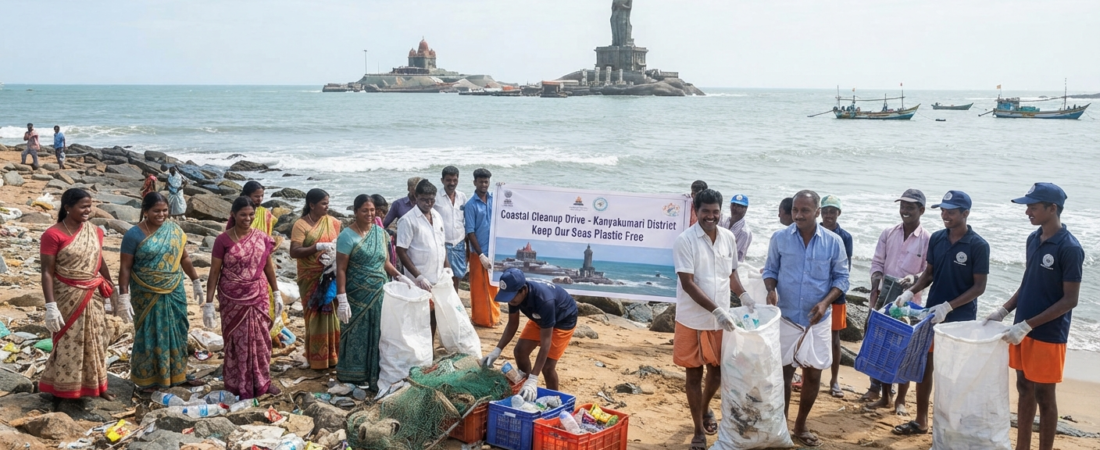
Discover how coastal waste management in Kanyakumari district is tackling marine pollution. Learn about the plastic crisis at the Triveni Sangam, beach cleanup initiatives, and how grassroots efforts are saving Tamil Nadu’s beaches.
Kanyakumari district, famed for the scenic Triveni Sangam where three seas meet, faces a severe environmental threat from land-based marine litter. Scientific beach assessments reveal that plastics and polystyrene foam make up over 85% of the coastal waste, heavily polluting major tourist hubs like Chothavilai and Sanguthurai beach. Furthermore, fishing villages across the 67-kilometre coastline struggle with abandoned nylon ghost gear and hazardous microplastics, which suffocate coral reefs, endanger marine life, and directly threaten the livelihoods of local fishing communities.
To combat this crisis, inspiring community-led sustainable waste management systems are actively turning the tide. Grassroots initiatives, such as the District Forest Department’s youth plastic collection drives and the MSSRF’s Kuppai Koodam project, have successfully transformed abandoned fishing nets into valuable commercial raw materials. Supported by institutional beach cleanups like the Swachh Sagar Surakshit Sagar campaign, these localized circular economy programs prove that community intervention can drastically reduce coastal pollution.
Achieving a trash-free coastline requires moving away from temporary cleanups toward permanent, decentralized infrastructure. Local town panchayats must strictly enforce source segregation, install organic waste converters, and levy heavy eco-taxes on commercial hotels dumping raw sewage. By integrating strict Tamil Nadu Pollution Control Board (TNPCB) regulations with eco-friendly alternatives like the Meendum Manjappai cloth bag initiative, Kanyakumari can protect its marine ecosystems and secure a sustainable future for coastal tourism.